

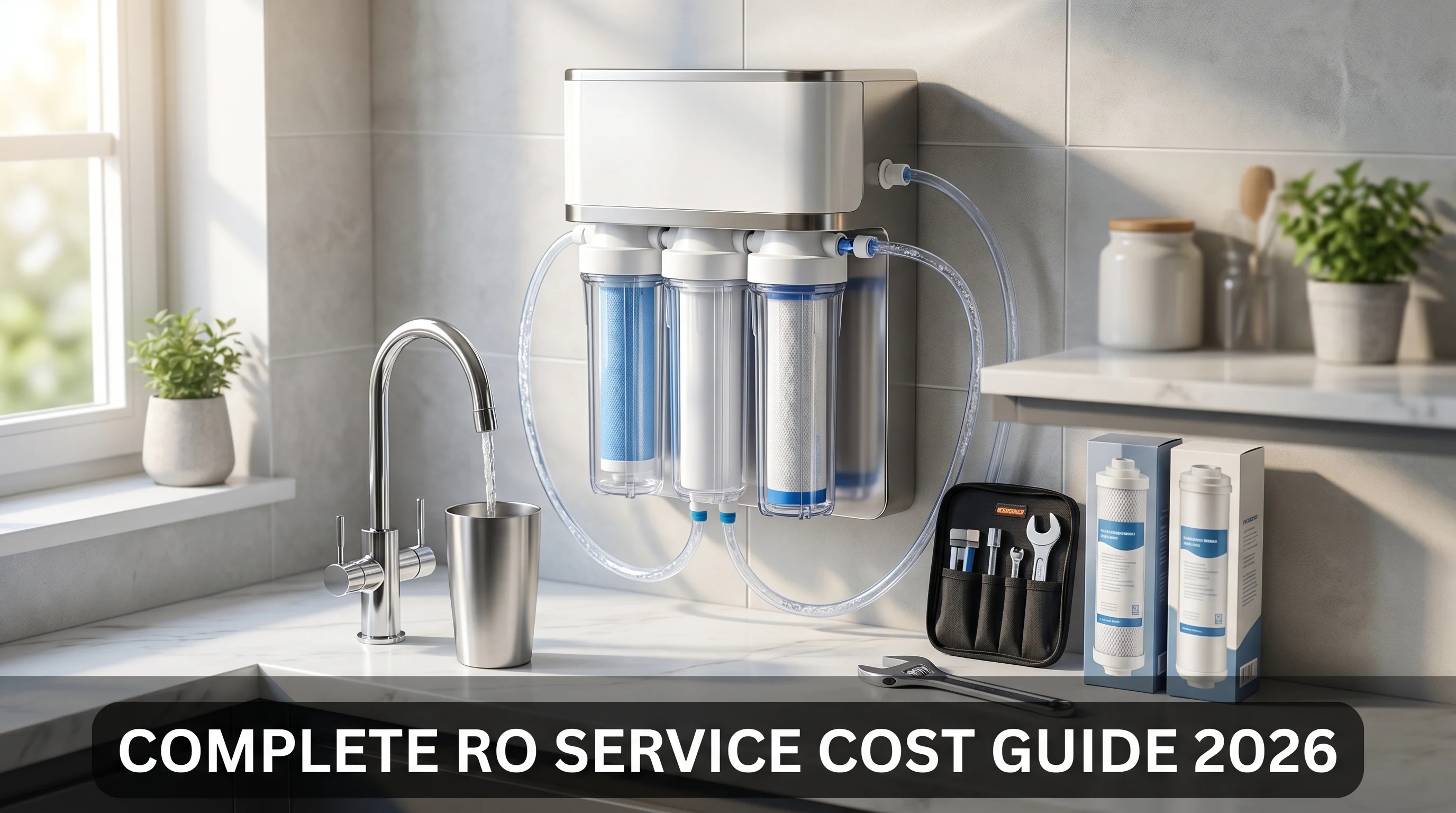
Understanding the Real Cost of Water Purifier Maintenance: A Complete Financial Guide
Discover RO service charges in India with our 2026 price list. Learn about annual maintenance costs, hidden fees, and how to save on water purifier servicing.
Navjot Singh
Author
May 14, 2026
Published
11 min read
Reading time
Understanding the Real Cost of Water Purifier Maintenance: A Complete Financial Guide
When families invest in reverse osmosis systems for their homes, they often focus exclusively on the purchase price without considering the ongoing expenses that follow. The reality is that maintaining a water purification system requires regular financial commitment, and understanding these recurring costs helps homeowners budget effectively while ensuring their families continue receiving safe drinking water. Many Indian households discover only after installation that servicing expenses can significantly impact their monthly household budgets, particularly when unexpected repairs arise or when manufacturers recommend more frequent maintenance than initially anticipated.
The landscape of water purifier maintenance pricing has evolved considerably in recent years, with service providers adopting various pricing models that can confuse consumers trying to make informed decisions. Some companies offer transparent fee structures, while others include hidden charges that only become apparent when technicians complete their work. Additionally, regional variations across India mean that residents in metropolitan cities often pay substantially different amounts compared to those in smaller towns, creating a complex pricing environment that requires careful navigation and research before committing to any service agreement.
For homeowners seeking clarity on what they should reasonably expect to pay, understanding the different components of maintenance costs becomes essential. The expenses extend beyond simple filter replacements to include membrane changes, electrical component repairs, pre-filter maintenance, and periodic sanitization procedures. Each of these elements carries its own price tag, and the frequency of required servicing depends on factors like water quality in your area, daily consumption patterns, and the specific technology your purification system employs. Households using approximately 20 liters daily will have different maintenance requirements compared to larger families consuming 40 liters or more.
Consumer awareness regarding these financial aspects remains surprisingly low, with many families entering service agreements without fully comprehending the total cost of ownership. Research conducted in 2026 indicates that approximately 67% of Indian households underestimate their annual purification system maintenance expenses by at least 30%, leading to budget constraints and sometimes forcing families to delay necessary servicing that compromises water quality. This comprehensive examination of pricing structures, typical expenses, and cost-saving strategies aims to empower consumers with the knowledge needed to make financially sound decisions while maintaining optimal water quality for their families.
Breaking Down Annual Maintenance Agreement Pricing Structures
Annual maintenance contracts represent the most popular servicing arrangement among Indian households, providing predictable costs and regular professional attention to purification systems. The ro amc price typically ranges between 2,500 and 6,000 rupees annually, depending on the system type, included services, and the service provider's reputation in your region. These contracts generally include two to four scheduled visits where technicians inspect all components, replace sediment and carbon filters, sanitize the storage tank, and verify that the system operates at optimal efficiency levels. Premium contracts may additionally cover membrane replacements, though many providers charge separately for this expensive component.
Understanding what these contracts genuinely include versus what generates additional charges proves crucial for avoiding unexpected expenses. Standard agreements typically cover routine filter changes and basic maintenance, but exclude membrane replacements, major component failures, and repairs resulting from physical damage or voltage fluctuations. The water purifier service cost under these contracts averages approximately 208 to 500 rupees monthly when distributed across twelve months, making budgeting relatively straightforward for most families. However, homeowners should carefully review contract terms, as some providers impose visit limits or charge extra for service calls beyond the agreed number.
Geographic location significantly influences contract pricing, with metropolitan areas like Mumbai, Delhi, and Bangalore commanding premium rates compared to tier-2 and tier-3 cities. Service providers in major cities typically charge 20-35% higher fees, justified by increased operational costs, higher technician salaries, and greater demand for services. Additionally, the technology level of your purification system affects pricing, with multi-stage systems incorporating UV sterilization or alkaline enhancement commanding higher annual fees than basic reverse osmosis units. Households should expect to pay approximately 1,000 to 1,500 rupees more annually for advanced systems requiring specialized technical knowledge.
Individual Service Visit Charges and On-Demand Maintenance
For families preferring flexibility over contracted commitments, understanding per-visit ro service charges becomes essential for financial planning. Individual service calls typically cost between 350 and 800 rupees, covering technician travel, basic inspection, and minor adjustments without parts replacement. This per-visit model appeals to homeowners whose purification systems require infrequent attention or those who prefer evaluating service quality before committing to annual agreements. However, calculating the total annual expense under this approach requires estimating how many service visits your system realistically needs, which varies based on water quality and usage patterns.
The ro service price for comprehensive maintenance visits that include filter replacements ranges from 800 to 2,000 rupees, depending on which components require changing and the specific filter brands used. Sediment pre-filters typically cost 150-300 rupees, activated carbon filters range from 250-500 rupees, and post-carbon filters fall between 200-400 rupees. When technicians replace all three filters during a single visit, the combined cost including labor usually totals 1,200-1,800 rupees, making this a significant household expense that occurs approximately every six months for most families.
Membrane replacement represents the most substantial individual expense homeowners face, with costs varying dramatically based on membrane quality and capacity. Standard 75 gallons-per-day membranes typically cost between 1,200 and 2,500 rupees, while higher-capacity 100 GPD membranes range from 2,000 to 3,500 rupees. Service providers usually recommend membrane replacement every 24-36 months, though actual lifespan depends heavily on inlet water TDS levels and daily purification volume. Households in areas with TDS levels exceeding 1,500 ppm may need replacement after just 18 months, significantly increasing long-term ownership costs. Including installation charges, complete membrane replacement services typically total between 1,800 and 4,000 rupees, making this a major expense that homeowners should budget for biennially.
Common Repair Expenses and Component Replacement Costs
Beyond routine maintenance, unexpected component failures generate repair expenses that can strain household budgets if not anticipated. The ro repair cost for common issues varies widely, with simple fixes like replacing inlet valves or flow restrictors costing 200-500 rupees, while major repairs involving pump replacement or electronic controller boards can exceed 2,500 rupees. Solenoid valve replacements typically range from 600-1,200 rupees, while storage tank repairs or replacements cost between 1,500-3,500 rupees depending on capacity and material quality.
Electrical component failures, including booster pump malfunctions and SMPS adapter problems, represent frequent repair scenarios that Indian households encounter. Pump replacements typically cost 1,800-3,200 rupees including labor, while new SMPS adapters range from 500-1,000 rupees. High-pressure switches and low-pressure switches, which protect the pump and control system operation, cost approximately 300-700 rupees each to replace. These components typically last 3-5 years under normal operating conditions, but voltage fluctuations and power surges can significantly shorten their lifespan, making surge protector installation a worthwhile preventive investment.
Leakage repairs represent another common expense category, with costs depending on the leak location and severity. Simple connector tightening or tubing replacement typically costs 200-400 rupees, while housing seal replacements range from 400-800 rupees. Complete housing replacements due to cracks or severe damage can cost 800-2,000 rupees depending on the stage affected. Water wastage from undetected leaks can also increase water bills substantially, with studies showing that even minor leaks can waste 5-10 liters daily, adding 150-300 liters monthly to household water consumption.
Types of Service Plans Available in the Indian Market
Indian consumers can choose from several distinct service plan structures, each offering different value propositions and financial implications. Comprehensive annual maintenance contracts represent the premium option, covering all routine services, filter replacements, and even membrane changes within a single annual fee. These plans typically cost 4,500-7,500 rupees yearly but eliminate surprise expenses and provide predictable budgeting. They work best for families seeking hassle-free maintenance without tracking individual service costs or negotiating repair prices.
Basic annual maintenance plans offer a middle-ground approach, covering scheduled service visits and routine filter changes while excluding membrane replacement and major repairs. Priced between 2,200-4,000 rupees annually, these contracts suit households whose systems require regular attention but who want flexibility in choosing membrane suppliers or handling significant repairs independently. This approach reduces upfront commitment while still ensuring regular professional maintenance that extends system lifespan and maintains water quality standards.
Pay-per-service models provide maximum flexibility for homeowners comfortable managing their own maintenance schedules and willing to pay individually for each service interaction. This approach works well for technically knowledgeable families who can perform basic troubleshooting, those with newer systems requiring minimal attention, or households in areas with excellent water quality requiring less frequent servicing. However, total annual costs under this model can exceed contract pricing if multiple service calls become necessary, making careful tracking and comparison essential for budget-conscious consumers.
Making Informed Decisions About Water Purifier Servicing Investments
Selecting the right maintenance approach requires evaluating your household's specific circumstances, including water quality parameters, daily consumption patterns, technical knowledge, and budget flexibility. Families in areas with TDS levels above 1,000 ppm should budget approximately 4,500-6,500 rupees annually for comprehensive maintenance, while those with better quality inlet water may manage with 2,500-4,000 rupees yearly. Understanding these realistic cost expectations prevents the disappointment and potential health risks associated with delayed or inadequate maintenance that compromises water purity and system performance. By comparing different service providers, reading contract terms carefully, and tracking actual service costs over time, Indian households can optimize their maintenance investments while ensuring continuous access to safe, clean drinking water for their families throughout 2026 and beyond.
FAQ
Q - What are the main components included in typical RO water purifier service charges in India?
A - Service charges typically cover several essential components beyond just filter replacements. These include sediment and carbon pre-filter changes, RO membrane replacement (usually needed every 2-3 years), UV lamp changes if applicable, and system sanitization. Labor charges for technician visits, transportation costs, and sometimes diagnostic fees are also part of the overall expense. The total annual cost varies significantly based on water quality in your area, daily usage patterns, and whether you opt for an annual maintenance contract or pay per visit.
Q - Why do RO maintenance costs vary so much between different cities and regions in India?
A - Regional pricing differences stem from several factors including local water quality conditions, availability of spare parts, and competition among service providers. Metropolitan areas generally have higher service charges due to increased transportation costs and higher technician wages, but they also offer more competitive options. Water with high TDS (Total Dissolved Solids) levels requires more frequent filter changes, increasing maintenance frequency and costs. Additionally, service availability in smaller towns may be limited, sometimes resulting in higher charges due to technicians traveling longer distances.
Q - How frequently should I expect to service my RO water purifier, and what determines this schedule?
A - Standard service intervals typically range from every 3-6 months for basic filter changes, though this depends heavily on your specific circumstances. Factors determining service frequency include your local water quality (particularly TDS levels), daily water consumption volume, and the number of purification stages in your system. Households consuming 20 liters daily with moderate water quality might service every 6 months, while larger families or areas with poor water quality may require quarterly servicing. Following manufacturer recommendations while monitoring filter condition indicators helps optimize the service schedule.
Q - What hidden costs should I watch out for when signing up for water purifier maintenance services?
A - Common hidden charges include separate fees for parts not covered under maintenance contracts, emergency visit surcharges for off-schedule repairs, and replacement costs for electrical components like adapters or solenoid valves. Some providers charge extra for services beyond a certain distance, apply GST separately from quoted prices, or have minimum charge policies even for minor repairs. Transportation fees, diagnostic charges that aren't waived even if you proceed with repairs, and end-of-contract part replacement recommendations are other costs that may not be clearly disclosed initially.
Understanding the complete cost structure of RO water purifiers extends far beyond the initial purchase. From annual maintenance contracts ranging ₹2,000-₹6,000 to filter replacements every 6-12 months, membrane changes at ₹1,500-₹3,500, and unexpected service charges for repairs, these recurring expenses significantly impact your household budget. Learn more about transparent pricing models, seasonal maintenance schedules, AMC versus per-visit costs, and how to identify genuine service providers versus unauthorized technicians. Explore further into filter lifespan indicators, water quality testing requirements, and cost-saving strategies that help families maintain optimal purification standards without compromising on safety or overspending on unnecessary services throughout your system's 8-10 year lifecycle.


