

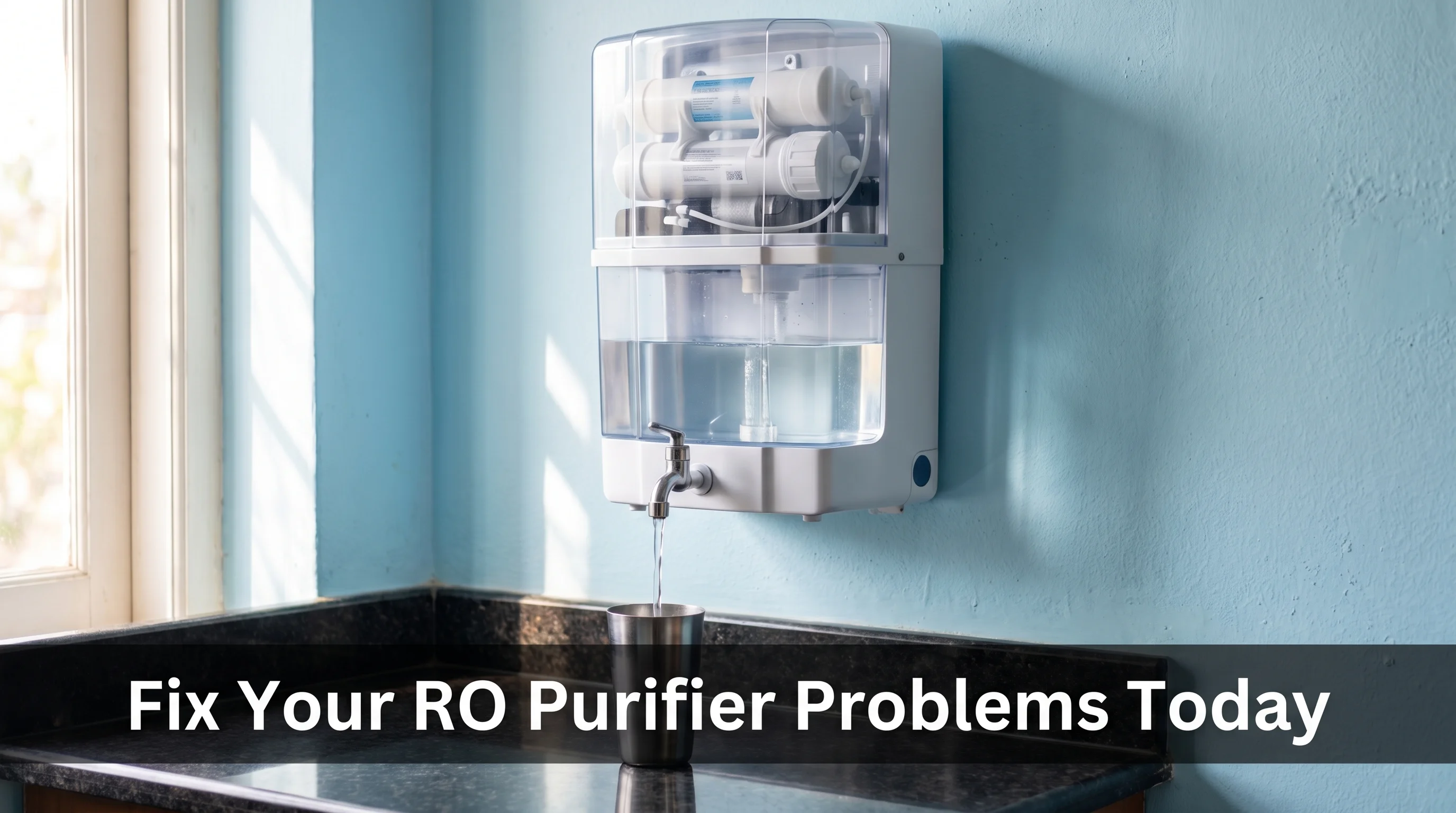
# Seven Essential Solutions When Your Water Purifier Stops Working Properly
Experiencing RO problems? Learn how to fix common water purifier issues yourself or when to search for ro repair near me for professional help.
Navjot Singh
Author
May 13, 2026
Published
15 min read
Reading time
Seven Essential Solutions When Your Water Purifier Stops Working Properly
Every household in India relies heavily on their reverse osmosis system for clean drinking water. However, when your unit starts showing signs of trouble, it can disrupt your entire daily routine. Understanding the most common malfunctions and their solutions helps you decide whether to attempt a DIY fix or search for professional ro repair near me services immediately. Most families discover these problems at the worst possible time—during summer months when water consumption peaks or when guests are visiting. The good news is that many issues have straightforward explanations and solutions that don't always require expert intervention.
Water purification systems have become increasingly sophisticated over the years, with multiple filtration stages, advanced membranes, and electronic components. This complexity means that several things can potentially go wrong. Some ro problems stem from simple issues like clogged filters or low water pressure, while others indicate more serious mechanical failures. Recognizing the difference between minor inconveniences and major malfunctions determines whether you need to call for water purifier repair near me assistance or handle the situation yourself. Statistics from 2026 show that approximately 68% of Indian households with purification systems experience at least one significant issue annually, making this knowledge essential for every homeowner.
The cost of neglecting these problems extends beyond inconvenience. Running a malfunctioning system wastes water, increases electricity bills, and potentially exposes your family to contaminated water. Research indicates that unaddressed purifier issues can waste up to 15 liters of water daily, which accumulates to significant amounts over months. Additionally, drinking water from a compromised system defeats the entire purpose of having a purification unit. Understanding these seven common problems helps you maintain optimal performance and ensures your family always has access to safe drinking water.
Prevention remains better than cure, but when problems arise, quick identification and appropriate action matter most. Whether you need immediate troubleshooting tips or guidance on when to contact ro repair service near me professionals, this comprehensive guide covers everything Indian homeowners need to know about the most frequent water purifier malfunctions and their practical solutions.
Low or No Water Flow From Your Purifier
When your system produces water at a frustratingly slow rate or stops dispensing entirely, several factors might be responsible. The most common culprit involves clogged pre-filters or sediment filters that accumulate dirt, rust, and debris over time. These filters serve as the first defense line, capturing larger particles before water reaches the delicate RO membrane. Indian municipal water often contains high sediment levels, especially during monsoon seasons, which accelerates filter clogging. Manufacturers typically recommend changing sediment filters every six months, but homes receiving particularly dirty water might need replacements every three to four months.
Another frequent cause of reduced flow involves low incoming water pressure. RO systems require minimum pressure levels—usually between 40 to 60 PSI—to function correctly. When municipal supply pressure drops below this threshold, the system struggles to push water through the membrane efficiently. You can verify pressure using a simple gauge available at hardware stores. If pressure remains consistently low, installing a booster pump solves this problem permanently. These pumps cost between 2,500 to 4,500 rupees and significantly improve system performance in areas with weak water supply.
A blocked or damaged RO membrane represents a more serious concern requiring professional attention. Membranes typically last 24 to 36 months but deteriorate faster in areas with extremely hard water or high TDS levels. When membranes fail, not only does water flow decrease, but purification quality also suffers. Replacing membranes requires technical knowledge and proper tools, making this situation ideal for searching ro repair near me services. Additionally, check if the storage tank is full—a common oversight where the system stops producing water simply because the tank has reached capacity and the automatic shut-off valve activated correctly.
Strange Taste or Odor in Purified Water
Discovering that your supposedly clean water tastes or smells unpleasant signals that something has gone wrong with the filtration process. The most typical reason involves exhausted carbon filters that no longer remove chlorine, organic compounds, and taste-affecting chemicals effectively. Post-carbon filters specifically target these issues, absorbing contaminants that affect palatability. These filters generally last 12 months in average conditions, though heavy usage or poor source water quality shortens their lifespan considerably. Replacing carbon filters costs between 400 to 800 rupees depending on brand and type, making this a relatively economical fix.
Bacterial growth inside the storage tank or connecting pipes presents another explanation for foul-smelling water. Tanks without regular sanitization develop biofilm—a slimy bacterial layer—that contaminates otherwise pure water. Experts recommend sanitizing your entire system every six months using food-grade hydrogen peroxide or specialized sanitizing solutions. This process involves emptying the tank, flushing the system with sanitizer, letting it sit for 30 minutes, then thoroughly rinsing before regular use resumes. Many homeowners overlook this maintenance step until obvious problems appear.
Sometimes the issue originates from the source water itself when municipal supplies experience contamination events or treatment changes. If multiple households in your area report similar problems, the issue likely lies with the water supply rather than your individual unit. However, if you notice ro not working properly in terms of taste improvement, your membrane might be damaged or improperly seated. A compromised membrane allows contaminants to bypass filtration, defeating the system's purpose entirely. This situation definitely warrants calling for ro repair service near me assistance rather than attempting DIY solutions.
Continuous Water Drainage or High Rejection Rate
Observing excessive water flowing down your drain pipe indicates your system is rejecting far more water than necessary. Normal RO systems reject approximately 3 to 4 liters for every liter of purified water produced, but malfunctioning units can waste significantly more. This wastage not only impacts your water bills but also represents environmental irresponsibility. The flow restrictor—a small component that regulates drainage rate—often becomes clogged or dislodged, causing irregular rejection ratios. Cleaning or replacing this inexpensive part typically resolves the problem.
Damaged or worn-out check valves also contribute to excessive drainage. These one-way valves prevent purified water from flowing backward into the drain line. When they fail, treated water continuously exits through the drain instead of entering your storage tank. Check valves cost merely 100 to 200 rupees and are relatively easy to replace if you have basic plumbing knowledge. However, identifying which valve has failed requires understanding your system's configuration.
A faulty automatic shut-off valve creates situations where the system runs continuously even after the storage tank fills completely. This valve should close the inlet water supply once adequate pressure builds in the tank, signaling it has reached capacity. When this mechanism fails, water keeps flowing through the system unnecessarily. Testing requires checking if water continues draining even when the tank is full and the faucet remains closed. Shut-off valve replacement requires moderate technical skill, so many homeowners prefer professional help when facing this particular problem. Searching for water purifier repair near me professionals ensures proper diagnosis and prevents further water wastage.
Leakage From Various Connection Points
Water pooling around your purification unit demands immediate attention to prevent damage to cabinets, flooring, and the unit itself. Loose fittings represent the simplest explanation—connections gradually loosen from vibration and pressure fluctuations over time. Systematically tightening all visible connections often stops minor leaks immediately. However, avoid over-tightening, which can crack plastic fittings and worsen the problem. Use appropriate tools and apply firm but gentle pressure.
Cracked or deteriorated tubing causes more persistent leaks that tightening cannot fix. The plastic tubing used in these systems becomes brittle over years of use, especially when exposed to sunlight or heat. Replacement tubing is inexpensive—typically 20 to 30 rupees per meter—and widely available. Ensure you purchase food-grade tubing with the correct diameter, usually one-quarter inch for most residential systems. Cutting old tubing and inserting new sections into existing fittings requires minimal tools and represents a manageable DIY task for most homeowners.
Sometimes leaks originate from the housing units themselves, particularly if they have cracked due to over-tightening during filter changes or from manufacturing defects. Housing leaks usually require complete replacement rather than repairs. Additionally, the storage tank's air valve or tank itself might develop leaks, causing water to drip from unexpected locations. Tank-related issues generally necessitate professional assessment since improper handling can damage the unit beyond repair. When facing persistent or mysterious leaks, contacting ro repair near me experts prevents costly water damage and ensures accurate problem identification.
System Making Unusual Noises During Operation
A properly functioning purification system operates relatively quietly, so strange sounds indicate developing problems. Gurgling or humming noises during the filtration cycle are generally normal, representing water moving through filters and air being released from lines. However, excessively loud or continuous grinding sounds suggest motor or pump issues requiring immediate attention. These components work hard to maintain proper pressure, and unusual noises often precede complete failure.
High-pitched squealing typically indicates inadequate incoming water flow or air trapped in the system. Check that the inlet valve is fully open and that sediment filters are not heavily clogged. Releasing trapped air involves shutting off the inlet valve, opening the faucet to drain pressure, then slowly reopening the inlet valve while keeping the faucet open until water flows steadily without sputtering. This simple procedure eliminates many noise-related complaints.
Rattling or vibrating sounds often stem from loose components or improperly secured mounting. Ensure the unit is firmly attached to the wall or cabinet and that all internal components sit properly in their housings. A booster pump that has worn bearings produces progressively louder operational noise before eventually failing. Pump replacement represents a moderate expense, ranging from 3,000 to 6,000 rupees depending on capacity and brand. When unusual sounds persist despite basic troubleshooting, professional diagnosis becomes necessary to prevent complete system failure.
Electrical or Display Panel Malfunctions
Modern purification systems feature electronic controls, LED indicators, and sometimes digital displays that provide system status information. When these components malfunction, the entire unit might stop working despite the mechanical parts being perfectly functional. Power supply issues top the list of electrical problems—check that the unit is properly plugged in, the outlet works correctly, and no circuit breakers have tripped. These obvious checks resolve surprisingly many supposed ro problems.
Wet electrical connections create safety hazards and operational issues. If your system experienced leaks near electrical components, moisture might have caused short circuits or corrosion. Allow components to dry thoroughly before attempting to power the system again. If problems persist after drying, the control board might have sustained permanent damage requiring replacement. Control board issues definitely require professional attention since working with electrical components demands both expertise and safety precautions.
Sometimes UV lamp indicators show errors when the ultraviolet sterilization bulb needs replacement. These bulbs typically last 9,000 to 10,000 hours—approximately 12 months with average usage. Operating the system with a failed UV lamp means bacteria and viruses are not being neutralized, compromising water safety. UV lamp replacement is straightforward but must be done carefully to avoid breaking the quartz sleeve surrounding the bulb. Following manufacturer instructions ensures successful replacement without damaging delicate components.
Tank Fills But Water Does Not Dispense
Experiencing a full storage tank that refuses to release water through the faucet frustrates many system owners. This situation often results from insufficient air pressure in the storage tank. These tanks use compressed air in a bladder system to push water out when you open the faucet. Over time, air pressure naturally decreases, eventually reaching levels where water cannot be dispensed effectively. Checking and adjusting tank pressure requires a standard tire pressure gauge and bicycle pump.
The ideal tank pressure when empty sits around 7 to 8 PSI. To check, shut off the inlet valve, open the faucet to completely drain the tank, then check pressure at the air valve typically located underneath the tank. If pressure reads low, add air gradually using a pump, checking frequently to avoid over-inflation. This simple maintenance task takes minutes and immediately restores proper water flow. Tank pressure should be verified every six months as part of routine maintenance.
A malfunctioning storage tank faucet or clogged faucet aerator also prevents water dispensing. The small filter screen inside the faucet spout traps particles that occasionally escape the filtration system. Unscrewing and cleaning this screen often restores flow. If the faucet itself has internal damage, replacement faucets cost between 300 to 600 rupees and are straightforward to install. When neither pressure adjustment nor faucet cleaning solves the issue, internal tank bladder failure might have occurred. This serious problem requires tank replacement since repairing the bladder is impractical and often impossible.
Understanding When to Call Professional Services
While many issues respond well to DIY troubleshooting, certain situations demand professional expertise. Membrane replacement, major leaks, electrical problems, and persistent quality issues after attempting basic fixes all fall into this category. Professional technicians possess specialized tools, replacement parts, and diagnostic equipment that average homeowners lack. They can also identify complex problems that manifest as misleading symptoms, preventing you from wasting time and money on incorrect solutions.
When evaluating whether to attempt repairs yourself or search for ro repair near me professionals, consider your technical comfort level, tool availability, and the problem's nature. Simple tasks like filter changes, pressure adjustments, and connection tightening suit DIY approaches. However, tasks involving internal components, electrical systems, or precision calibration justify professional service calls. Most service providers charge between 300 to 600 rupees for basic service visits, with additional costs for parts and complex repairs.
Regular professional maintenance every 12 months significantly reduces emergency breakdowns and extends system lifespan. Annual service typically includes complete filter replacement, membrane inspection, sanitization, pressure testing, and performance verification. This preventive approach costs less than emergency repairs and ensures your family consistently receives safe drinking water. Establishing a relationship with reliable service providers means faster response when urgent problems arise.
Proper system maintenance combined with prompt problem addressing ensures your investment continues protecting your family's health for many years. Most quality purification systems can last 10 to 15 years with appropriate care, making maintenance efforts worthwhile. Understanding these common problems transforms you from helpless victim of appliance failures into an informed homeowner capable of basic troubleshooting and knowing precisely when professional help becomes necessary. Your water purification system represents a critical household component deserving attention and care that matches its importance to your family's wellbeing.
FAQ
Q - How often should I replace the filters in my RO water purifier?
A - Filter replacement frequency depends on your water quality and usage patterns, but general guidelines suggest changing sediment and carbon filters every 6-12 months. The RO membrane typically lasts 2-3 years with proper maintenance. If you notice reduced water flow, strange taste, or odor before these timeframes, consider replacing filters earlier. Households with higher sediment levels in their municipal supply may need more frequent replacements. Always keep track of your last filter change date to maintain optimal purification performance.
Q - Why is my water purifier making unusual noises, and should I be concerned?
A - Unusual sounds from your purifier often indicate air in the system, particularly after filter changes or extended periods of non-use. This typically resolves itself after running water for a few minutes. However, persistent loud humming, grinding, or clicking sounds may signal pump problems or loose components that need attention. A vibrating noise could mean the unit isn't level or stabilized properly. If noises continue after basic troubleshooting, it's wise to seek professional inspection to prevent potential damage.
Q - What causes my purified water to taste or smell bad despite having a filtration system?
A - Bad taste or odor usually indicates saturated carbon filters that have exhausted their capacity to remove chlorine and organic compounds. Storage tank contamination is another common cause, especially if water sits unused for extended periods. The RO membrane might also be compromised, allowing contaminants to pass through. Sometimes, the issue originates from your input water source experiencing temporary quality changes. Regular filter replacement and periodic storage tank cleaning typically resolve these problems and restore water quality.
Q - How much water wastage is normal for an RO purifier, and when does it become excessive?
A - Traditional RO systems typically reject 3-4 liters of water for every liter purified, though newer models have improved this ratio significantly. If you notice substantially more wastage than usual, check for membrane damage, incorrect pressure settings, or faulty flow restrictors. Continuous drainage even when the tank is full indicates a malfunctioning shut-off valve. Excessive rejection not only wastes water but also signals underlying problems that reduce purification efficiency. Monitoring your rejection ratio helps identify issues before they worsen significantly.
Learn more about maintaining your RO system's peak performance through regular filter checks and timely part replacements. Discover how understanding pressure requirements, membrane lifespan, and storage tank functions can help you identify issues early. Stay informed about water quality standards and when professional intervention becomes necessary for your family's health and safety.


